Deployed in the field.
Cleaning robots are working in hotels, hospitals, logistics centres, and shopping malls around the world.
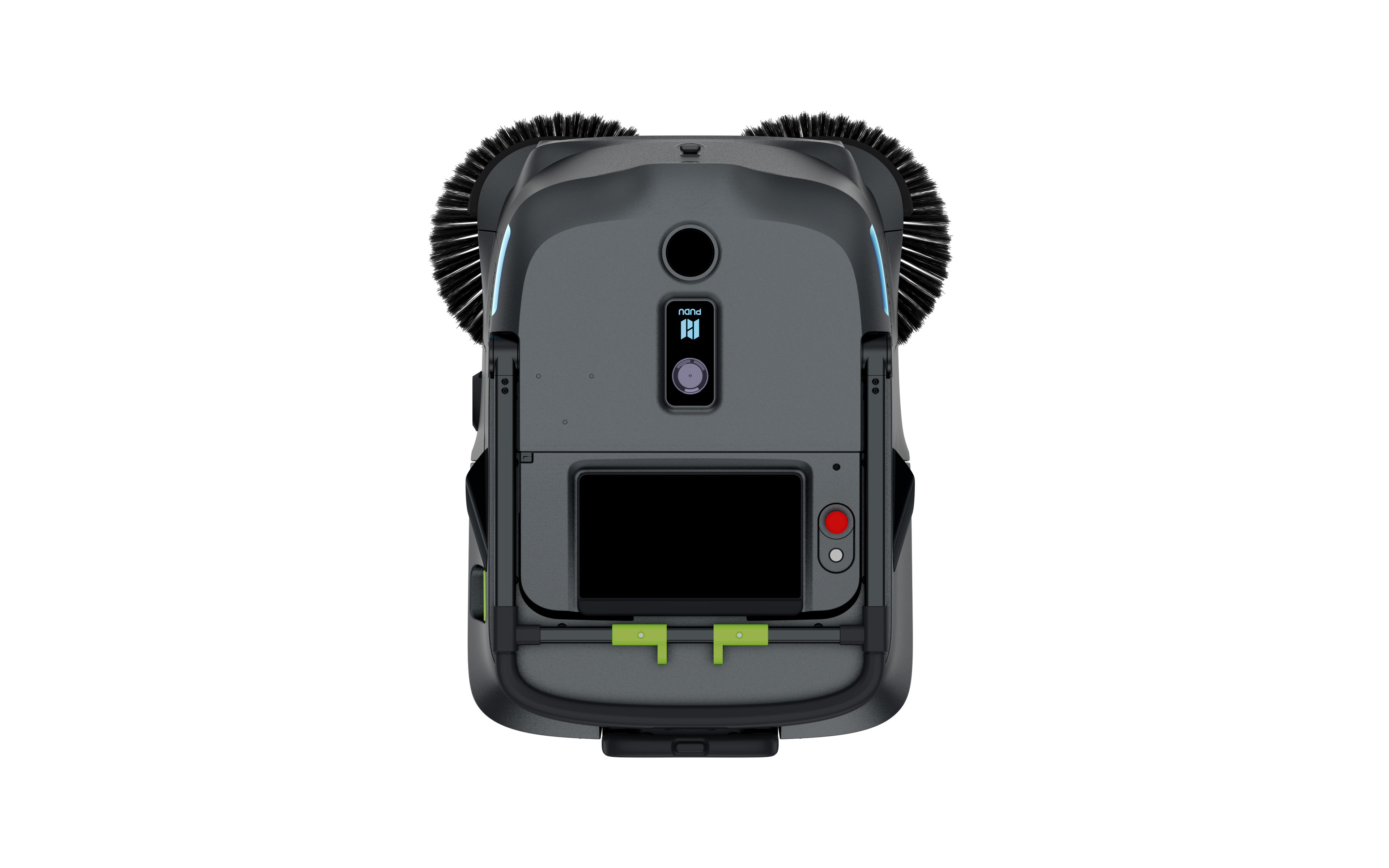
Customer Reference Statement – Vertiflex
“We introduced an autonomous sweeping robot into our warehouse operation, and the results exceeded our expectations. We operate a smaller warehouse with an area of 3,000 m², where the layout of functional zones changes dynamically depending on the projects we are working on.
The biggest surprise? We have practically reduced the need for wet cleaning to almost zero, which was something we did not expect. We no longer pay for either internal or external labor to clean the warehouse floor. The only regular maintenance required is emptying the waste container, which any warehouse operator can handle independently. At this point, it only needs to be done once a week.
We were also surprised by the robot’s reliability. As long as a few simple operational rules are followed, the robot successfully completes its sweeping task in 19 out of 20 cases. In the one unsuccessful case, the reason is usually human error, for example when an employee blocks the only accessible route between warehouse zones with an obstacle.
The robot maps the environment automatically, and changes in material placement do not interfere with its operation. It works at night without any lighting, so cleaning has no impact on warehouse activities. In practice, it can clean between 1,000 and 1,500 m² per hour, depending on the complexity of the environment.
In ‘AI Inspection’ mode, where it rapidly scans the area, monitors contamination, and selectively cleans only identified dirty spots, the performance reaches up to 2,500 m² per hour. In practice, we combine cleaning schedules so that a full-area cleaning is performed twice a week, while AI Inspection runs five times a week. This approach saves both energy and the wear of consumable parts.
One unexpected bonus effect is that the robot indirectly enforces operational discipline. Materials must be stored in their designated locations. Aisles remain accessible and work areas stay organized. Immediately after a cleaning task is completed or interrupted, an automatic report is generated.
The warehouse manager was able to encourage all warehouse personnel to maintain operational discipline without additional supervision. Whenever procedures were not followed, there was immediate evidence available in the form of a report stating that the cleaning task could not be completed due to an unavoidable obstacle.
For colleagues who are still hesitant, our recommendation is simple: test a sweeping robot in a real operation for one week. They will see the results for themselves, just as we did.”
Experience with Deployment and Daily Operation
“The deployment process was surprisingly smooth. The technician delivered the robot, and the Wi-Fi settings had already been configured in advance. The only thing we needed to specify was the location of the charging station.
The initial mapping of the entire facility took four hours and was carried out directly by our own employee responsible for cleaning, under the supervision of the technician. The mapping process is straightforward: a slow drive through the facility in manual mode.
Once the space was mapped, we divided it into zones according to how frequently each area requires cleaning. Programming scheduled cleaning tasks can be handled by any shift supervisor with average technical skills, although our supervisor initially had concerns. With the user manual and telephone support, the process proved very simple.
Cleaning tasks can be added or launched manually at any time. They can also be started remotely through a mobile application, which can be installed and used by multiple people simultaneously.
In our facility, the robot operates at night when activity in the warehouse is minimal or non-existent. It does not require any lighting. As a result, we also save energy costs, since our previous cleaning service naturally needed full lighting during night shifts.
The only technical adjustment we had to make was reconfiguring the security system. The alarm system must not react to moving objects up to a height of 80 cm.
We have been using the robot since January 2026. During the first few weeks, we encountered one issue: plastic pallet straps occasionally became tangled in the brushes. Today, this no longer happens. Employees quickly learned that pallet straps belong in a bin immediately after unpacking a pallet, not on the floor. The robot changed this behavior faster than any internal instruction ever could.
The result is a permanently clean floor and an operation free not only from dust and dirt but also from miscellaneous waste. No external cleaning company. No daily coordination required.”